
"coffee farmer earnings"
900 article(s) found

Characteristic species of sun-dried coffee beans in Humbera Manor, Ethiopia
The characteristic types of sun-dried coffee beans in Humbera Manor in Ethiopia are in Ethiopia. The grading and quality control system of coffee is divided into three levels: producer, regional and national. All coffee is inspected by local inspection agencies before leaving the country of origin, and then re-tested at the coffee inspection and grading centers in Addis and Diredawa to determine its quality grade. Coffee is auctioned and sold.

Description of flavor and taste of Sidamo Lion King Coffee Bean introduction to the production area of grinding scale variety manor
Sidamo Lion King Coffee Bean Flavor description Grinding scale Variety Manor region introduced in 2010 and 2012 continuously won 92 and 94 points from the authoritative American coffee review website Coffee Review. The producing area belongs to volcanic soil with rich nutrients and good drainage. These fertile nutrients are maintained by the degradation of natural organic matter. This batch is located in Dila.

Geography of Rwandan coffee beans what are the varieties of Rwandan coffee? Rwandan coffee flavor
Professional coffee knowledge exchange more coffee bean information please follow the coffee workshop (Wechat official account cafe_style) Rwanda coffee growing environment Rwanda is located in the heart of the interior of Africa, its mountain terrain is fertile land, as well as ancient traditional bourbon species, indicating that the natural environment needed to grow quality coffee beans can be found everywhere in Rwanda. Coffee was made in Germany in 1904.

Introduction to the varieties of coffee beans produced by grinding scale in Ethiopia
In Ethiopia, the grading and quality control system of coffee is divided into three levels: producer, regional and national. All coffee is inspected by local inspection agencies before leaving the country of origin, and then re-tested at the coffee inspection and grading centers in Addis and Diredawa to determine its quality grade. Coffee is graded before auction and sale, for all involved in production, acquisition,

The way out for Peru is to vigorously develop the cultivation of high-quality coffee, which is expected to rank fifth in the world in 2016.
Annell, chairman of the committee. Roman said that specific measures to achieve this goal include updating coffee varieties, encouraging producers and farmers to achieve joint operations, promoting the contract responsibility system and training small farmers. Peruvian coffee production hit an all-time high in 2011, with production of 7.2 million piculs and export earnings of US $1.6 billion, he said. Roman said that although he was subjected to Rain Water last year,

Flavor description of coffee beans in Xidamo Chiso producing area of Ethiopia introduction of taste varieties
Flavor description of coffee beans in Xidamo Shachiso region of Ethiopia 1. After picking beans without special screening and treatment, uneven appearance and maturity are mixed together, the process is relatively rough, so the quality of coffee beans is unstable and prone to defective beans. two。 Coffee farmers usually find an open space near their home to deal with it, so there is often a lot on the ground.

Description of flavor and taste characteristics of Sidamo Lion King boutique coffee beans A brief introduction to the producing areas of varieties and manors
The coffee flavor of Sidamo is very diverse, with different soil types, microclimate and countless native coffee species, which make the coffee produced in cities and towns have obvious differences and characteristics. In 2010-2012, it continuously obtained the high score of CR92~94, the authoritative coffee evaluation website in the United States. Thus it can be seen that the raw beans in this area are extraordinary. Towering mountains, highlands, plateaus

Introduction to the flavor description method of Starbucks Uganda boutique coffee beans
Uganda Coffee Bean Edition main Note: over the past half a century, the prices of primary products on the world market have been falling, and the incomes of farmers in developing countries have been deteriorating. Take coffee as an example. In Asia, Africa, Latin America and other places, there are 20 million to 25 million farmers and growers directly engaged in the coffee industry, and coffee export income is directly related to their survival. But in recent years, although coffee has become

A brief introduction to the Market Price of aromatic Fine Coffee Bean varieties in Ethiopia
Yega Xuefei is a small town, 700-2100 meters above sea level, synonymous with Ethiopian boutique coffee. It has been a wetland since ancient times. The ancient saying "Yirga" means to settle down and "Cheffe" means a wetland. The mode of production and flavor of coffee here are so outstanding that Ethiopian coffee farmers compete to take pride in the flavor of their coffee, making it the worst in Africa.

Introduction of NCLL coffee beans in Zambia _ Mapang coffee beans in Kassama region, Zambia
Professional coffee knowledge exchange more coffee bean information Please follow Coffee Workshop (Wechat official account cafe_style) among the countries in the world that produce Arabica coffee beans, Zambia in Central Africa plays only a very small role, with an annual export volume of about 6000 tons, with a total profit of about US $85 million. But this country is working hard in the hope that

Ethiopian coffee beans with floral apricot peaches Location Climate Altitude Profile
Ethiopia's Yirgacheffe coffee is petite, but gentle and sweet. As the home of coffee, Ethiopia's millennia of growing and processing traditions have resulted in high-quality washed Arabica beans. Light baked with unique lemon, floral and honey sweet aromas, soft fruit acids and citrus notes, fresh and bright taste. not

Rwanda Coffee Flavor treatment method
Rwandans have been growing coffee since colonial times, but until 1999, its products were still classified as below Class C and were not popular in the global market. The reason for the poor quality is that farmers do not have a fixed procedure for washing coffee beans and do not process coffee fruits according to specifications in time. Buyers buy coffee beans at $0.33 per kilogram, and farmers keep warm by the meagre profits earned at low prices.
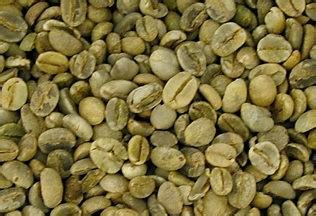
Which countries are mainly exported to the graded production areas of Ethiopian coffee beans
Coffee is Ethiopia's most important export cash crop and the main source of Ethiopia's foreign exchange earnings. Ethiopia's coffee exports account for about 3% of the world market, making it the eighth largest coffee exporter in the world. Coffee exports increased steadily from 58000 tons in 1990 to 110000 tons in 1995-1996 and remained at this level in the following years. 2001-2002

A brief introduction to the treatment method of grinding degree and baking degree of Ethiopian boutique coffee beans
Even the official research unit of Ethiopia does not know how many Arabica subspecies there are in Ethiopia. The coffee cooperatives in this mountain are certainly different from those planted in another mountain, and even small farmers in the same region grow different varieties of coffee. Like the little Jasper of Suzhou, although she is petite, she is gentle and delicate, sweet and lovely, and can attract ten thousand without any decoration.

Is there a gender difference in coffee beans? What is a cod bean and what is a mother bean?
Professional coffee knowledge exchange more coffee bean information Please follow the coffee workshop (Wechat official account cafe_style) have you ever heard that male beans, female beans and coffee beans can also be divided into male and female? In fact, in order to earn tourists' money, Indonesia deliberately divided coffee beans into male beans and female beans. In fact, in order to earn tourists' money, Indonesia deliberately divided coffee beans into male beans and female beans. In fact, coffee trees did not.

A brief introduction to the treatment method of grinding degree and baking degree of sweet Ethiopian boutique coffee beans
Even the official research unit of Ethiopia does not know how many Arabica subspecies there are in Ethiopia. The coffee cooperatives in this mountain are certainly different from those planted in another mountain, and even small farmers in the same region grow different varieties of coffee. Like the little Jasper of Suzhou, although she is petite, she is gentle and delicate, sweet and lovely, and can attract ten thousand without any decoration.

Burundian boutique coffee bean flavor taste manor production area introduces the characteristics of Burundian coffee
Nathan James Johnston, the boss of Cartel Coffee Roasters, said: in fact, the first Burundian coffee I tested came from one of the hills of Long Miles. It was a really unforgettable moment, and when we finished grinding the coffee beans, the strong smell of flowers filled the room, and I remember thinking that it felt like one of those places.

A brief introduction to the cultivation of Ethiopian boutique coffee beans with multi-level taste, geographical location, climate and altitude
Even the official research unit of Ethiopia does not know how many Arabica subspecies there are in Ethiopia. The coffee cooperatives in this mountain are certainly different from those planted in another mountain, and even small farmers in the same region grow different varieties of coffee. Like the little Jasper of Suzhou, although she is petite, she is gentle and delicate, sweet and lovely, and can attract ten thousand without any decoration.

A brief introduction to the treatment method of grinding degree and baking degree of aromatic high-quality Ethiopian coffee beans
Ethiopia finally woke up and decided to learn from the skills of Western developed countries in mastering brands and creating value for the benefit of hard-working farmers, so in March 2005, Ethiopia applied to the United States Patent and Trademark Administration for the trademark rights of three famous places of origin, namely, Sidamo, Yega Xuefei and Harald. In the future, American operators must be authorized by Ethiopia to sell boutique coffee in these three places.

Rwanda Coffee Flavor
Rwandans have been growing coffee since colonial times, but until 1999, its products were still classified as below Class C and were not popular in the global market. The reason for the poor quality is that farmers do not have a fixed procedure for washing coffee beans and do not process coffee fruits according to specifications in time. Buyers buy coffee beans at $0.33 per kilogram, and farmers keep warm by the meagre profits earned at low prices.